Evergreen Growing is a civic platform for Washington — built on listening first, following the evidence, and asking the questions that institutions would rather not answer. The same rigorous, consultative method applied to every issue that matters to this community.
When balanced, it hums: stable, efficient, resilient. When weight piles up on one side, the spin cannot compensate. It wobbles, veers, and falls. Government works the same way. The best policy comes from the friction of genuine disagreement. When one voice drowns out the rest, that friction disappears.
The institutions that should hold Washington accountable — its courts, its commissions, its boards, its colleges — are only as good as the scrutiny they are willing to accept. When that scrutiny disappears, the communities they serve pay the price.
"Our top is wobbling. Evergreen Growing exists to restore the balance."Each pillar follows the same process: community listening sessions, systems analysis using the iceberg canvas, community canvases, voice submission forms, and public records where needed. The Education pillar is the most developed — eight months in, with a forensic record and two published op-eds. The others are opening now, shaped by what the community brings.
What does it mean when a nationally recognised experimental college — built for exactly this moment in history — empties out while its own administration looks the other way? Eight months of listening, records, and documentation have produced a documented answer.
The average first-time homebuyer in Washington is 40 years old. Young people cannot stay. Small businesses cannot survive. Families are making impossible choices every month. The listening sessions are open — tell us what you are seeing.
When judges retire early and governors fill the bench. When boards are stacked with one worldview, never challenged. When consequential decisions are made without the public knowing until after. Power, once concentrated, finds ways to stay concentrated.
People are dying on our streets. The response has been shaped more by what fits a political narrative than by what demonstrably works. Families deserve a public safety conversation rooted in evidence, not ideology. Tell us what you are seeing in your neighbourhood.
The pillars above came from what the community raised first. The next one will come from what you are seeing that is not on this list yet. The iceberg canvas, the listening sessions, and the submission forms are open. Tell us what is out of balance where you live.
From the community listening sessions and from Amalie O'Connor's writing — these are the patterns the community keeps naming.
When a judge retires early, the governor appoints a replacement who runs as an incumbent. Boards are stacked with one worldview. Power, once concentrated, finds ways to stay concentrated. The Evergreen College story is one example — it is not the only one.
The average first-time homebuyer in Washington is 40 years old. Young people cannot afford to stay in the state they grew up in. Small business owners are working harder into a harder environment. Washington should be where people plant roots.
Without balance, the budget discussion becomes performative. The path of least resistance — another tax — becomes the path chosen and compounds the affordability problem instead of solving it. Hard choices require more than one voice in the room.
People are dying on our streets. The response has been shaped more by what fits a narrative than by what demonstrably works. That is what happens when dissent is treated as obstruction rather than information.
Share of American teenagers enrolling in college after high school, down from 70% in 2016. Lack of relevant options is a key reason.
Of undergraduates took their entire degree online. The rush to online education is chasing a minority preference while abandoning what students actually want.
Of recent graduates say they learned more in their first six months on the job than during their entire undergraduate education.
Of 2025 graduates secured full-time jobs related to their degree. Nearly half said they felt unprepared to apply for entry-level positions.
In the Thurston Chronicle and forthcoming.
An emptying campus is not a sign that Evergreen's model has failed. It may be a sign that its leadership has lost sight of what makes it irreplaceable.
Read at Thurston Chronicle →Evergreen is not a conventional college that fell behind. It is a structurally different institution that has spent fifty years building exactly the education the AI economy now demands.
Read at Thurston Chronicle →When balance breaks down, everyone pays. On what imbalanced power costs ordinary Washington families — and what restoring it looks like for the Evergreen State.
Link coming once published
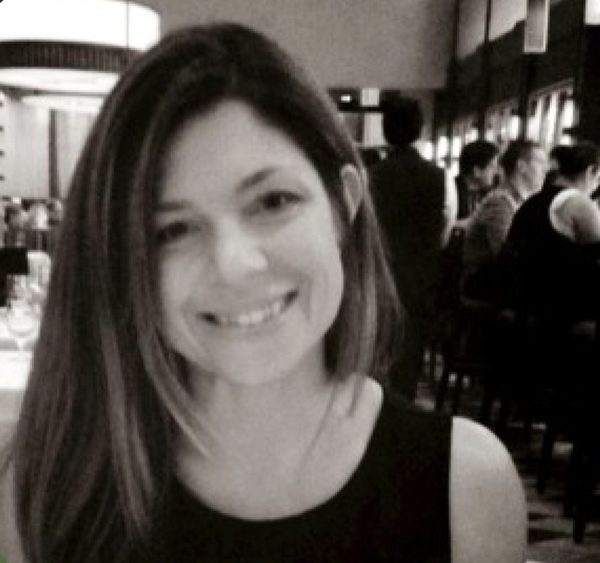
Amalie O'Connor has lived in Olympia for more than twenty years. She is a former educator, budget analyst, and state employee. She founded Evergreen Growing after coming to believe that the gap between what our institutions promise and what they deliver is not an accident. It is what happens when no one is asking hard questions and no one is required to answer them.
She started with The Evergreen State College because that is where the evidence was sharpest. Eight months of public records, listening sessions, and forensic analysis later, the findings have been published twice in the Thurston Chronicle and circulated across the state. But the college was always one example of a bigger pattern — institutions across Washington that have stopped answering to the communities they serve.
Evergreen Growing is the platform she built to change that: one pillar at a time, one listening session at a time, one community at a time.
Amalie designed the Evergreen Growing logo with a book in mind: Finding the Mother Tree by scientist Suzanne Simard, who discovered that trees in a forest are not competing. They are communicating. Through a vast underground network of roots and fungi, they share nutrients, send warnings, and nurture the young and vulnerable. The oldest, tallest tree at the centre holds the whole forest together beneath the surface, invisibly, so the entire community can grow. Otto Scharmer at MIT grounds his life's work in the same metaphor: sustainable change begins by nurturing the social soil, the foundational conditions that enable a regenerative community. Washington is the Evergreen State. The roots are deep. The community is connected. And the forest is still worth growing.